Morning
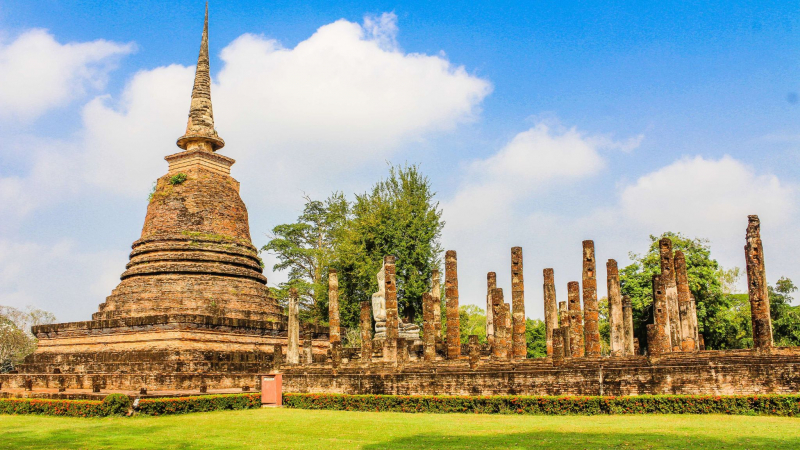
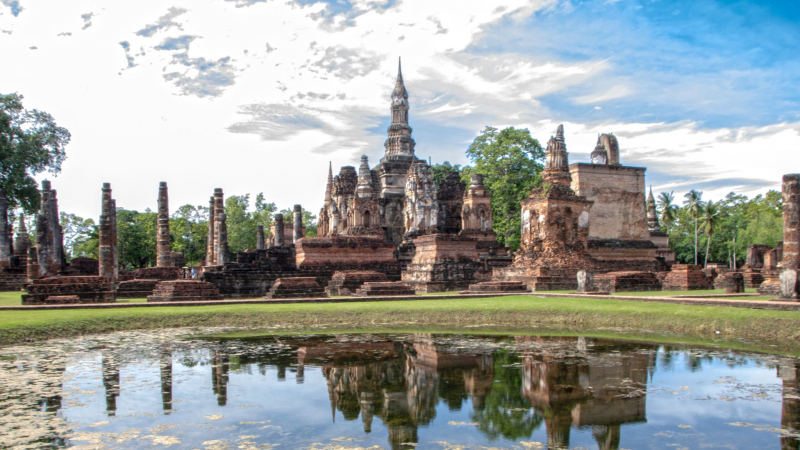
After breakfast, we set off to see the mystical and spiritual heart of the kingdom at Sukhothai Historical Park, home to the ruins of royal palaces and Buddhist temples, as well as the city's gates, canals, and water dykes control system.
They all have been maintained and restored by the beautiful Fine Arts Department with the support of UNESCO, with an eye toward developing Thai national identity as well as the protection of a beautiful example of humankind's cultural heritage.
Inside the City Walls:
We first visit the Royal Palace and Wat Mahathat, this area is surrounded by a moat and contains two main compounds; the royal building and the sanctuary in the palace. In the royal compound exists the ruins of the royal building called Noen Phrasal.

A sanctuary lying to the west behind the Royal Palace compound is Wat Mahathat. It is Sukhothai's largest temple, with a customary main Chedi in a lotus-bud shape and a ruined vihara.
After that, we continue to visit other temples, including Wat Si-Sawai, Wat Traphang-Ngoen, Wat Chana-Songkhram, Wat Mai, and The Ramkhamhaeng National Museum.
Outside the City Walls:
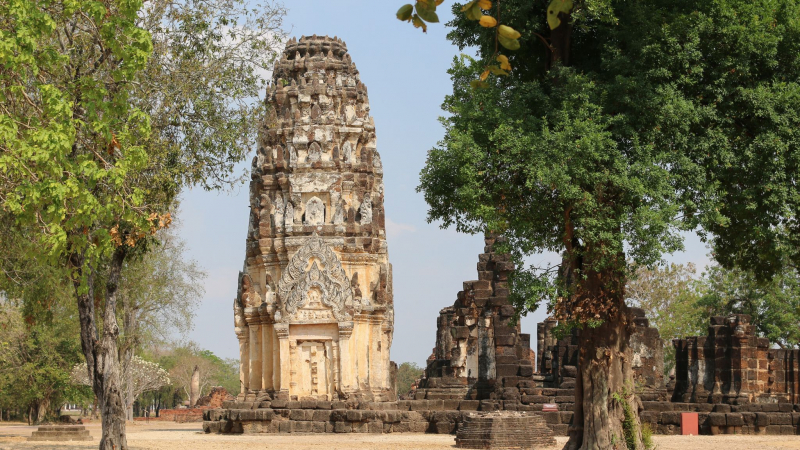
The first place is Wat Phra-Phai-Luang, this sanctuary, formerly a Khmer-Hindu shrine but later converted into a Buddhist monastery, is surrounded by a moat. It is second in importance to Wat Mahathat.
We will then visit other temples, including Wat Si-Chum, Wat Chang-Rop, etc.
Following the break, we move to the next destination, which is Sangkhalok Museum. This private museum collects the most comprehensive collection of Sangkalok porcelains, a type of porcelain produced during the Sukhothai Kingdom.
You will wander through ancient porcelains and clay potteries in various styles and periods of production time.


 Canada